Imagine a Monday morning in a high-rise office in Dubai’s DIFC or Riyadh’s King Abdullah Financial District & a senior finance executive gets an urgent email that looks like it is from their CEO.
The email asks for an immediate payment to a new partner to finish an important tech project. Everything from the logo to the professional tone looks genuine. Because it looks official, the executive sends the money right away. But the money goes to a scammer’s account instead of a real business.
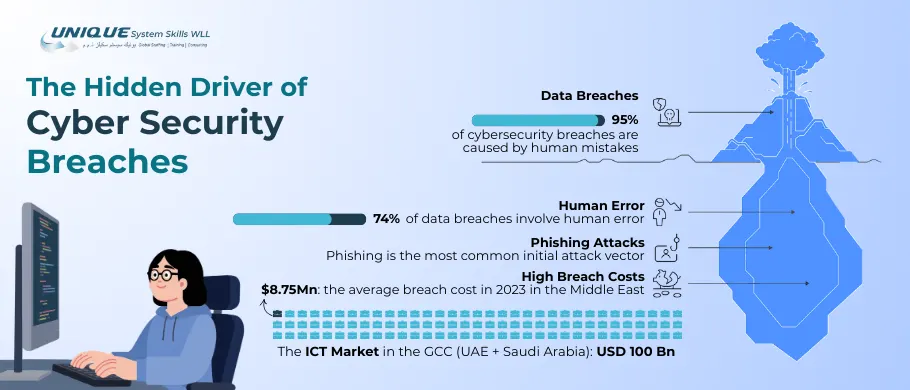
This is not just a story; it is a real problem happening to many companies in the Middle East today, as hackers get better at tricking people. According to IBM, 74% of data breaches involve human error.
In the past, a company’s digital data was like a physical vault in an office. Now that companies in the GCC are using more digital tools, that ‘vault’ has no walls. Data is everywhere, and so are the risks. We have moved from physical offices to hybrid environments, cloud-based infrastructures, and interconnected supply chains. However, many firms are still at risk even after spending millions on modern firewalls and AI-driven detection systems. The explanation is simple: the most susceptible link in the security chain continues to be the human element.
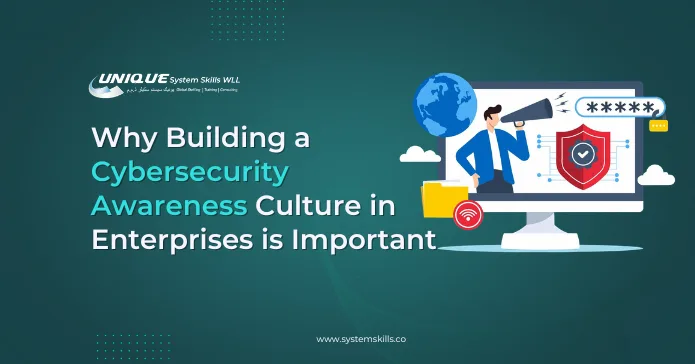
It’s not enough to talk about online safety once a year. To stay in business today, companies in the Middle East must implement cybersecurity awareness programs.
Why Cyber Security Awareness Training Matters in GCC Enterprises
The GCC is moving faster than ever into the digital world. Big plans in Saudi Arabia and the UAE have pushed companies to use the cloud and connected devices. But this growth makes businesses a bigger target for hackers. For any company, having cybersecurity awareness is the only way to stop a small mistake from turning into a total disaster.
In the Gulf, the risks are very high. It’s not just about protecting classified documents and a company’s clients. It’s about the trust of everyone who uses the company’s service.
When employees learn how to stay safe online, they stop being a “weak link” and start acting like a human wall that blocks hackers. CyberSecurity Awareness makes sure that employees stay alert and keep their access safe.
Cyber Risks Facing the GCC Region
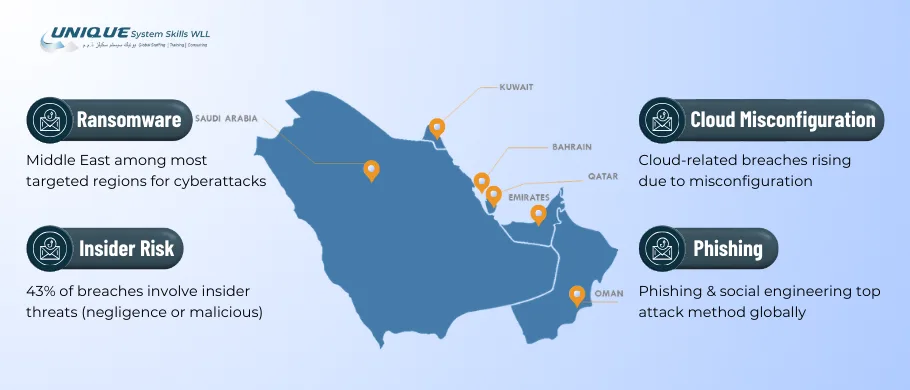
The types of threats facing Gulf companies are changing all the time. While hackers are always a worry, they are now spending less time trying to break the computer code and more time trying to trick people’s minds.
The Rise of Sophisticated Phishing
Phishing is the most common method of gaining first access. In the GCC, we see highly specialized social engineering attacks, which are frequently written in perfect Arabic or English and refer to local events, religious holidays, or regional regulatory updates. Even the most alert staff can be taken in by these personalized traps if they do not receive ongoing cybersecurity awareness training.
Insider Threats and Social Engineering
Security threats don’t always come from “bad guys” trying to harm. Often, it is just a careless mistake by an honest employee. For example, someone might leave their laptop open in a coffee shop in Kuwait or use a risky USB drive in an office in Muscat.
Hackers also use social engineering, which is a fancy way of saying they take advantage of our culture’s friendly and helpful nature. They trick people into giving away passwords by pretending to be tech support or by saying there is an urgent problem that needs to be fixed.
Regulatory and Compliance Penalties
The regulatory environment in the GCC has matured significantly. Organizations must navigate strict frameworks such as the NCA (National Cybersecurity Authority) ECC-1:2018 in Saudi Arabia, the UAE Information Assurance Standards, and Qatar’s National Cyber Security Strategy. If employees don’t know the rules of cybersecurity, they might accidentally break the law. This can lead to huge fines and could even cause the government to take away the company’s license.
Role of Leadership in Driving Cybersecurity Awareness
Many companies make the mistake of thinking security is only a problem for the IT department to fix. In reality, a real culture of safety has to start at the very top with the owners and bosses. If the senior leaders don’t take security seriously, the rest of the staff will just see it as annoying extra paperwork rather than something truly important.
Cybersecurity leadership involves more than approving a budget for tools. It requires leaders to model the behavior they expect to see. When a CEO mentions the importance of reporting suspicious emails during a meeting, it sends a powerful message.
It signals that security is a shared responsibility that impacts the company’s bottom line. That’s why boards in the GCC are increasingly holding CISOs accountable not only for technical defenses, but for employee cybersecurity awareness maturity metrics.
Leadership Tips for Company-Wide CyberSecurity Awareness Programs
To transition from a “compliance-only” mindset to a genuine culture of security, leaders must take a structured approach:
1. Policy Alignment and Clarity
Make sure that security policies are clear and written in a way that employees understand how they should apply to their specific roles. The “why” behind the policy must be clear to both the developer in Doha and the logistics manager in Bahrain.
-
Cross-Department Involvement
The IT department is not solely responsible for security. HR should be actively involved in onboarding security training, while the legal department should be involved in data privacy discussions. Marketing should understand the risks of social media hacking, and a multidisciplinary committee can help tailor training to different business functions.
Using Simulations to Build Real-World Cybersecurity Awareness
Theory is important, but practice makes impactful changes in your skill level when it comes to identifying cyber threats. One of the most effective ways to build employee cyber awareness is through controlled, real-world simulations.
Phishing Simulations
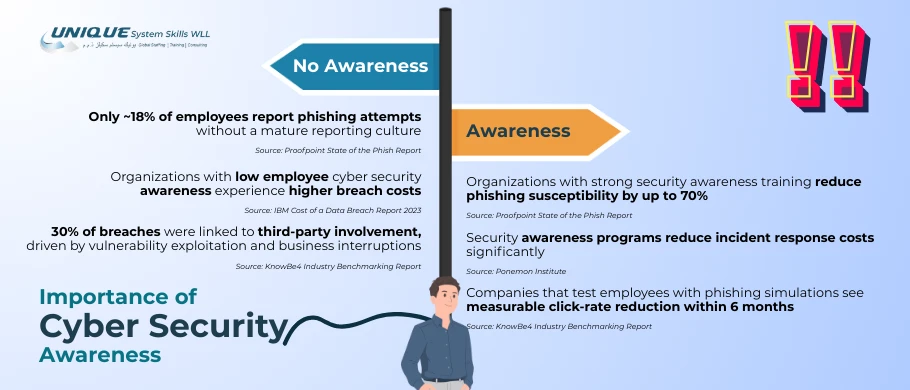
By sending safe, simulated phishing emails to staff, organizations can gather data on who clicks, who provides credentials, and most importantly, who reports the email to the SOC (Security Operations Center). This creates a learning moment that is much more effective than a slide presentation.
Incident Response Drills
What happens if the company’s ERP system goes down due to ransomware? Leadership and technical teams should conduct regular tabletop exercises to walk through the response process. These will identify gaps in communication and will make sure that everyone knows their role during a crisis.
Metrics for Measuring CyberSecurity Awareness Success
You can’t manage what you don’t measure. For a GCC firm, showing the ROI of an awareness program includes tracking key KPIs like
Click-Through Rates (CTR): The percentage of employees who fail a phishing simulation. A smaller number of clicks shows improving awareness among employees.
Reporting Rates: How many people reported that the simulation is more important than CTR? A high reporting rate shows an engaged workforce.
Training Completion Metrics: checking how many employees have finished their cybersecurity awareness training modules and checking their quiz scores.
Incident Reduction: Correlating awareness efforts with a decrease in actual malware infections or lost devices.
Compliance Readiness: How well the organization follows the human-centric controls mandated by ISO 27001 or the NCA Saudi Arabia.
Building a Sustainable Cybersecurity Awareness Culture in the GCC
Building a culture is a marathon & not a sprint. To make it sustainable in the GCC, organizations should consider the following points:
Continuous Learning
Training once a year is quickly forgotten. It’s always better to give little info all the time, like short videos, monthly new updates, or weekly tips. This keeps safety fresh in everyone’s mind.
Cultural Sensitivity and Localization
The workforce comes from many different backgrounds. Training should use local examples. This is what we do at Unique System Skills. When the examples feel real and local, people listen.
Long-Term Mindset Shift
We need to stop using fear. If someone makes a mistake, they should feel safe reporting it right away instead of worrying about being fired. When people are not afraid to speak up, they can help to catch a hacker much faster.
Conclusion
Spending money on understanding cybersecurity is more than an IT cost. It’s an intelligent choice that will help the company grow. Companies that incorporate cybersecurity awareness into their daily operations can protect their reputation, comply with the law, and remain strong.
In a world where one wrong click can ruin an entire company, understanding what to look for is our most valuable tool.